A Stone Still in the Tread
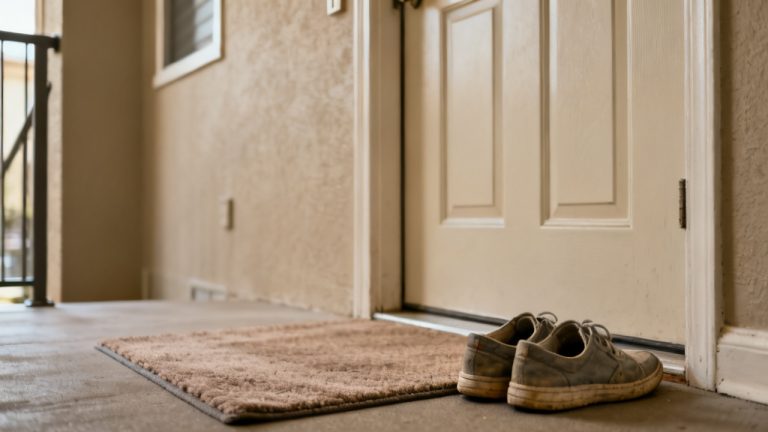
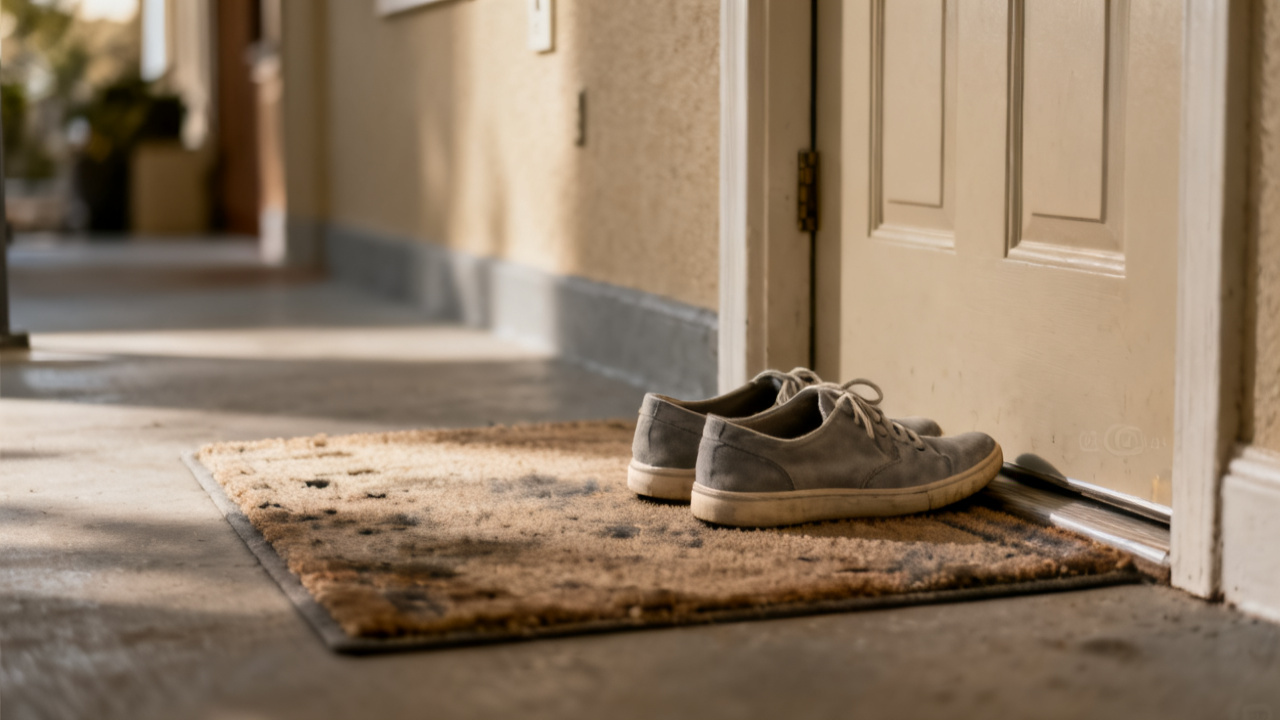
You feel a click on the hard floor. You turn the shoe over. The faint, jagged edge of river rock peeks out between two thick rubber lugs, dull gray against the matte black tread of your right hiking boot. You’re still balanced on one foot outside your apartment unit, the left boot still laced tight on your foot, light drizzle still dripping off the cuff of your waterproof jacket onto the coir welcome mat. You don’t want to track mud inside, so you lower yourself to sit for a minute before you mess with the stone.
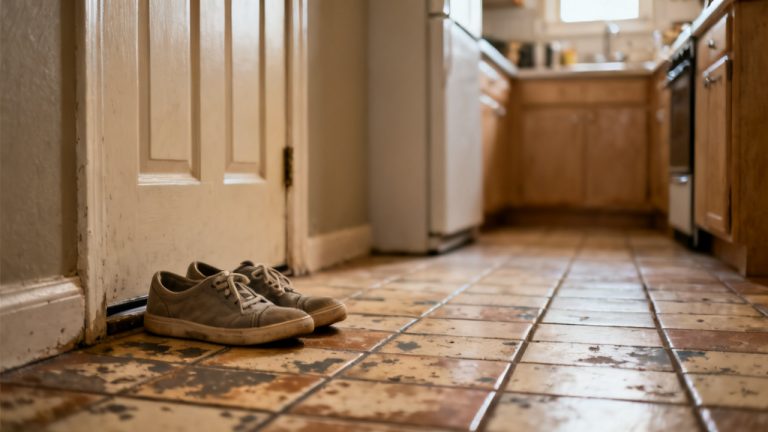
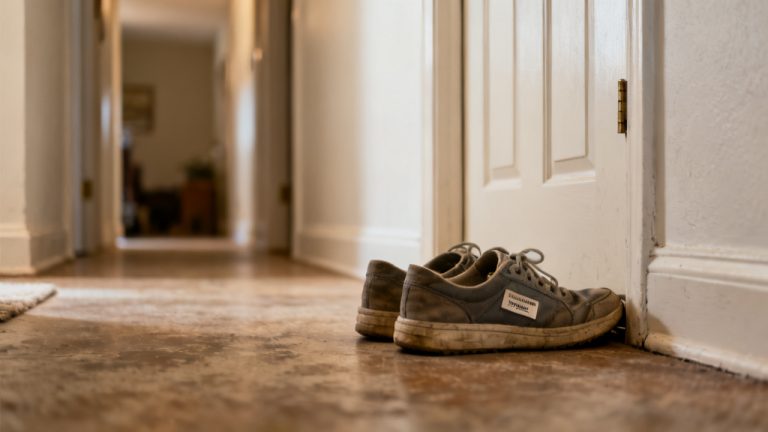
This hiking pair rests propped on the low Doorstep Bench while you root through your entry caddy for a small flathead screwdriver.
You keep the caddy tucked just inside the door for small, quick fixes like loose eyeglass screws, stuck mail, or the random bit of debris that gets caught in your shoes after a hike. The screwdriver has a bright orange handle so you can spot it immediately under a pile of spare hair ties, rechargeable batteries, and a half-used roll of packing tape. Illustrative example: You were 1.2 miles up the shaded oak trail this afternoon when you first felt a faint bump under your step, but you wrote it off as a loose twig caught in the tread until you got back to the sidewalk a block from your building. The rock must have wedged itself deeper as you walked the paved stretch, pressing hard enough into the tread that it didn’t dislodge on its own even when you stamped your foot to shake off mud at the trailhead.
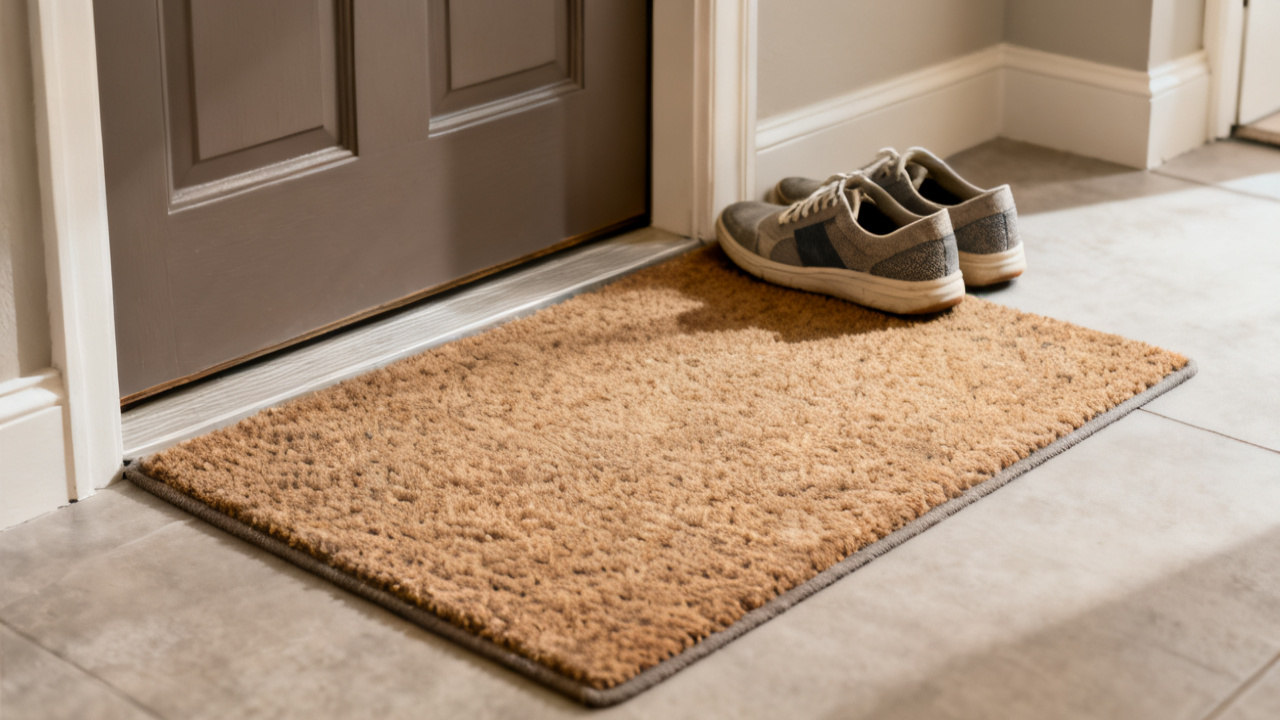
Tug the laces of the damp right shoe loose so you can hold it steady without straining your wrist.
You don’t yank hard enough to fray the woven polyester laces, just loosen the first three eyelets enough that you can slip your non-dominant hand inside the toe box to brace the boot from the inside. The insole is still slightly warm from your foot, and you can feel the faint impression of your toe pad where you’d pressed down when you stepped on the rock half an hour earlier. You don’t bother taking the left boot off yet, since you only need to work on the right one for now, and the cool concrete step is uncomfortable to sit on for too long with just your thin cotton sock between you and the rough surface.
Pry the stone free from the right shoe’s tread in one sharp, controlled motion to avoid scratching the softer inner rubber.
The last time you tried to dig a rock out of these boots with a random stick you found on the sidewalk, you ended up scratching the side of the rubber sole, so you take your time now to get the angle right. Follow these steps to dislodge the rock without damaging the tread:
- Line the edge of the flathead screwdriver up with the widest gap between the stone and the surrounding lug, applying light even pressure so the screwdriver doesn’t slip and scratch the exposed waterproof fabric on the side of the boot.
- Hold the toe of the boot firmly with your other hand, keeping your fingers curled safely away from the edge of the screwdriver to avoid accidental nicks as you apply pressure.
- Push down on the screwdriver handle slowly to lever the stone upward, stopping if you feel any unexpected resistance that suggests the rock is wedged around a small plastic tread support under the top layer of rubber.
- Wiggle the screwdriver slightly side to side if the stone sticks, until it pops free of the tread and clatters onto the welcome mat below.
You pick the stone up after it falls, turning it over in your palm to see it’s roughly the size of a dime, smoothed round from years of being washed down the creek that runs along the side of the trail. You toss it into the small potted succulent sitting next to your door, where it joins three other small rocks you’ve pulled out of these same boots over the past six months.
Wipe loose grit off both shoes to stop leftover sediment from tracking across your hardwood floors.
You grab the stiff bristle brush you keep tucked under the welcome mat, running it over the tread of both boots to dislodge any smaller bits of sand, dirt, and dead pine needles caught in the gaps between lugs. You brush off the sides of the boots too, wiping away splatters of mud that dried on the waterproof fabric while you walked home. You tap the toes of both boots against the edge of the step three times to knock any remaining loose grit off the soles before you set them down again. There’s still a faint dark smudge on the toe of the right boot from where you kicked a half-buried root on the trail, but you don’t bother scrubbing it off now; it’ll wear away on its own after a few more walks.
Set this pair by the entry vent to air out overnight before you head inside for the evening.
The vent blows warm air from your heating system toward the entryway, so the damp fabric of the boots will dry fully while you sleep, no musty mildew smell lingering in the toes by morning. You don’t bother tucking them into the closet, since you plan to wear them again tomorrow, and you don’t want to forget to check for any tread damage before you leave. You stand up, brush off the back of your jeans, and lock your front door behind you, leaving the boots where they sit to finish drying. You’re done working on them for tonight, and you’re ready to make a mug of hot tea and warm up after the cool, damp hike.
Grab this pair on your way out tomorrow to test for any remaining tread damage before your planned trail walk.
You’ll slip them on before you lock the door, shifting your weight from foot to foot to feel for any faint bumps or unevenness that could mean a smaller fragment of rock is still stuck in the tread you missed tonight. If you don’t feel anything odd, you’ll head out for your planned 3-mile walk along the ridge trail, where the path is lined with mossy rocks and small patches of wild trillium that are just starting to bloom this time of year. If you do feel a bump, you’ll repeat the same process you used tonight, prying the fragment free before you get more than a few steps from the building. You don’t expect any issues, but it’s easier to check before you leave than to stop halfway up the trail to dig out another rock while you’re halfway up a steep incline with a full water bottle slung over your shoulder.
Total word count: 1318