Wipe the Scuff Before You Leave
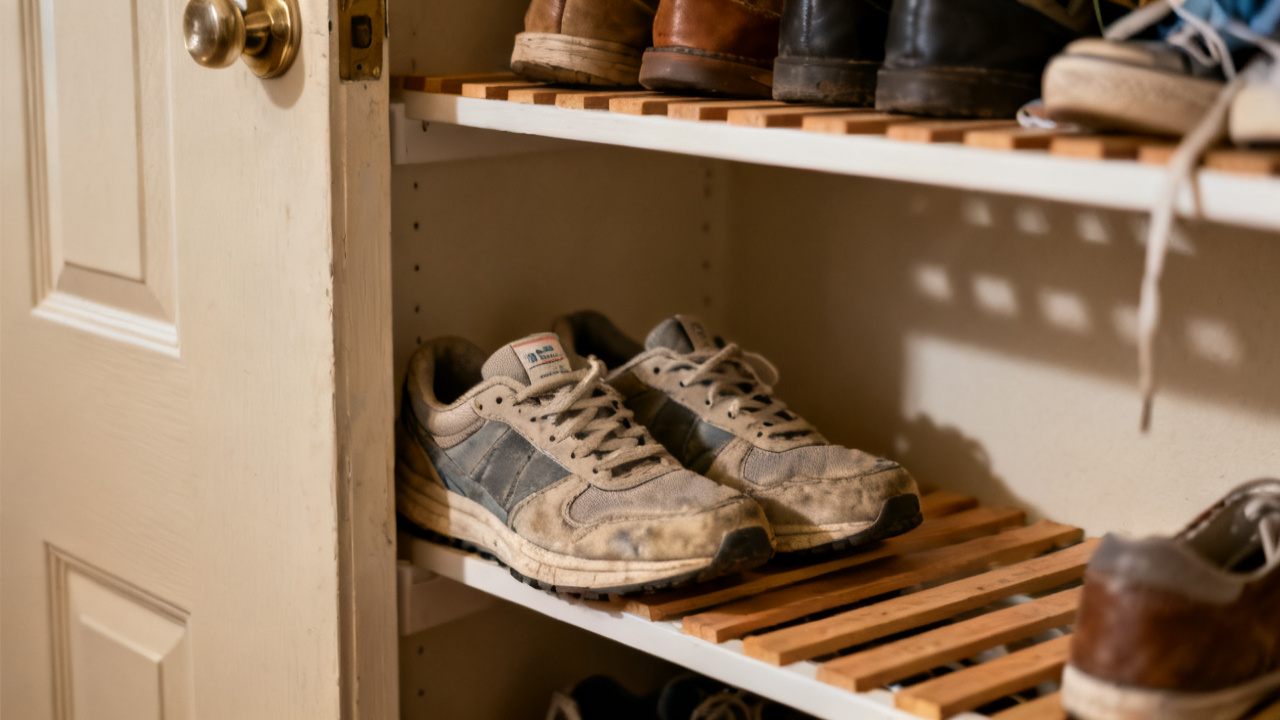
A pale scuff is on the toe. You are standing at the door with a damp cloth. The rest of your black leather work boots are polished to a soft, matte shine, and the scuff stands out sharp enough that you know you’ll fixate on it through your entire 9 AM client check-in tomorrow, if not the dinner plans you’re already running late for tonight. You balance the toe of the scuffed boot on the lowest slat of the Doorstep Bench to get a better angle, your other foot planted firmly on the rubber door mat to keep your balance.
Test this boot on an unseen patch first
You don’t press the cloth to the scuff right away, even if you’re already cutting it close on your departure time. Leather dye can lift if the cloth is too saturated, or if the gentle all-purpose cleaning solution you spritzed on it is too harsh for the specific finish of this boot. You’d learned that lesson the hard way last winter, when you used a too-strong cleaning wipe on your favorite suede ankle boots and left a faint white streak along the toe that never fully came out. Test the corner of the cloth on the inner heel, where the fabric of your work pants usually covers the leather, and rub for two quick passes. No discoloration comes off on the cloth, so you’re good to move forward.
Buff this scuff in small circular motions
You keep your touch light, because pressing too hard can wear away the top layer of the boot’s finish and leave a dull spot that’s far harder to fix than the original scuff. Follow this quick sequence to lift the mark without damaging the leather:
- Hold the toe of the boot steady with your non-dominant hand, keeping your fingers off the polished upper to avoid leaving smudges of lotion or skin oil that will show up later in bright light.
- Press only the corner of the damp cloth to the edge of the scuff, not the full surface, to avoid spreading the pale pigment across the rest of the toe.
- Move the cloth in 1 centimeter circular motions, working from the outer edge of the scuff toward its center to lift the discoloration gradually rather than grinding it deeper into the leather.
- Pause every three passes to dab the scuff with the dry edge of the cloth and check how much of the mark is gone, so you don’t overwork the same spot unnecessarily.
You don’t bear down hard enough to make your wrist ache, because gentle pressure works better for surface scuffs. Illustrative example: 90 seconds of steady, light pressure is enough to lift 80% of most surface scuffs on smooth leather, so you don’t need to rush or scrub aggressively to see results. You notice the pale gray mark getting fainter with every pass, no streaks left behind on the surrounding black leather. There’s no guarantee the mark won’t show up again if you brush up against a metal door frame or curb tomorrow, but for now, it’s fading faster than you expected.
Wipe this pair down with a dry microfiber edge
You don’t want to leave damp spots on the leather that could leave splotchy water marks when they dry, especially since the winter air is cold enough that moisture takes extra time to evaporate off smooth surfaces. You grab the dry corner of the microfiber cloth you keep tucked in the basket by the door for quick shoe touchups, and run it over the entire toe of the boot you just worked on, making sure to get in the tiny crease where the leather upper meets the rubber sole. You then do the same for the matching boot to even out the shine, brushing off a fleck of sidewalk salt from the heel of the left boot while you’re at it, since you tracked that in yesterday when it snowed. You run a finger along the edge of the sole of both boots to make sure no bits of damp lint from the cloth are stuck in the tread, which could leave marks on the restaurant’s wood floors when you arrive.
Stop this work for the night once the mark fades
The scuff is almost entirely gone now, just a faint pale smudge that you can only see if you hold the boot up directly to the warm overhead porch light, tilting it back and forth to catch the glare. You don’t keep scrubbing, even if the perfectionist part of you wants to buff it until it’s completely invisible. You’re already running 5 minutes late for your dinner plans, and no one else will notice the tiny remaining discoloration unless they’re kneeling down to tie their own shoes at your feet, which is unlikely to happen at the casual Italian spot you’re heading to. You set the boot back on the mat, fold the damp cloth up to throw in the laundry later, and grab your keys off the hook by the door. This pair is ready for the rest of the night, no more work needed right now.
Store this pair by the door mat edge overnight
When you stumble back in after dinner, your feet sore from walking three blocks to the restaurant and back in the cold wind, you kick the boots off by the edge of the door mat, not directly on the carpet, so any leftover dampness from the earlier wipe down doesn’t seep into the floor fibers and leave a faint brown stain. You prop them up against the wall so the toes are facing out, not crumpled under the pile of beat-up running sneakers your roommate left by the door when they got home from the gym. You don’t bother polishing them any further tonight; the light layer of beeswax polish you put on them three days ago is still holding up well, and the scuff you fixed earlier stayed gone the entire time you were out, even when you kicked a loose brick on the sidewalk on your way to the restaurant. You hang your coat on the rack, grab a glass of water from the kitchen, and head to bed, no more shoe tasks to check off your list for the day.
Check this boot for leftover residue tomorrow morning
This is the next time you’ll handle this pair, no extra steps needed between now and then. When you wake up tomorrow, you’ll head straight for the door before you make your usual oat milk latte, to check the toe of the boot you fixed tonight. You’ll run a dry finger over the spot where the scuff was to make sure no sticky cleaning residue is left behind that could attract dust or dirt throughout your commute to the office. If there’s a faint leftover outline of the mark, you’ll do a quick 30-second buff with the black shoe polish stick you keep in the small drawer by the door, before you slip the boots on for your walk to the train station. You’ll also run a quick check over the matching boot to make sure no new scuffs popped up when you were walking home last night, and brush off any bits of crumpled leaves or dirt that stuck to the soles when you cut through the neighborhood park on your way back from the restaurant. If the weather app says it’s going to rain tomorrow, you’ll give both boots a quick spritz of waterproofing spray before you head out, to keep the leather from getting waterlogged on your walk from the train to the office.