A Canvas Sneaker That Smells After a Wet Commute
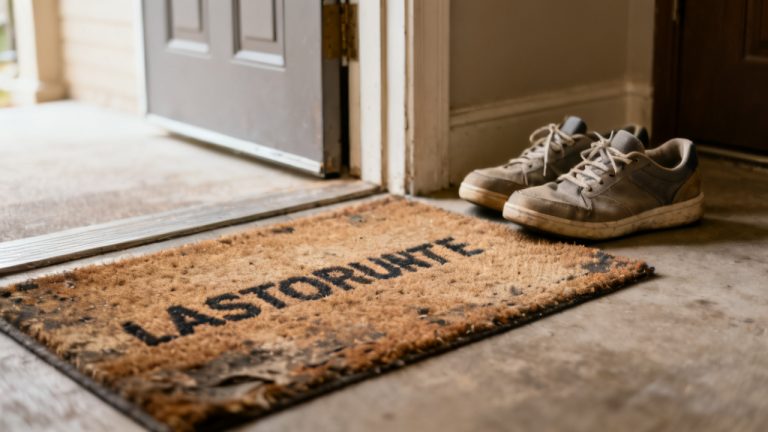
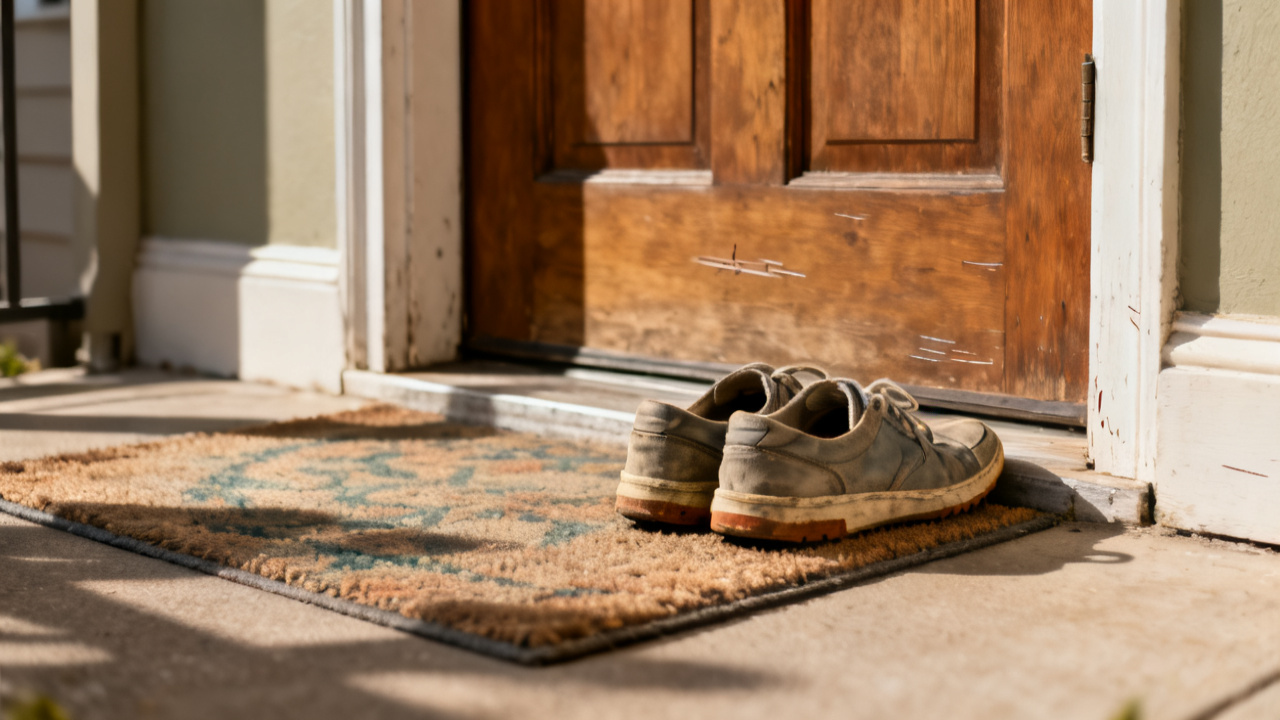
You open the shoe and the smell is already there. The sock is in your hand. You’d walked three blocks through an unexpected downpour after the bus dropped you off, and the canvas soaked through before you could duck under an awning. The front doormat is still dotted with the puddles you shook off your soles five minutes ago, and you set the damp sock on the edge of the mat to keep from getting the entryway rug wet.
Shake this pair over the doormat to dislodge loose debris
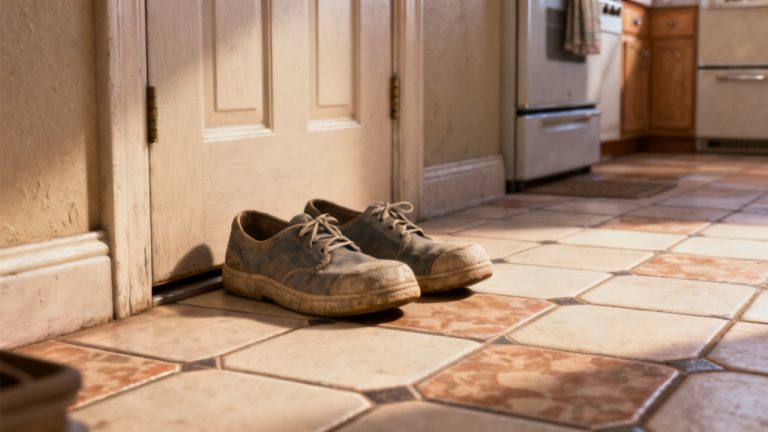
You grip each shoe by the heel, tap the toes lightly against the rubber mat edge first to knock free any clumps of mud trapped in the tread grooves. You flip them upside down, shaking gently so you don’t fling grit across the hallway. Illustrative example: 90 seconds of gentle shaking over the mat will pull free most loose sidewalk grit and rain-sodden leaf bits without stretching the canvas upper. You can perch on the Doorstep Bench if you don’t want to kneel on the cool entryway tile while you work. Any small debris left trapped under the insole will just trap more moisture and make the odor worse later, so you take an extra second to pick out any tiny pine needles caught in the edge of the sole with your fingernail. You don’t need to yank out the insole right now unless you can see a large clump of dirt stuck under it, since removing it too often can wear down the glue that holds it in place.
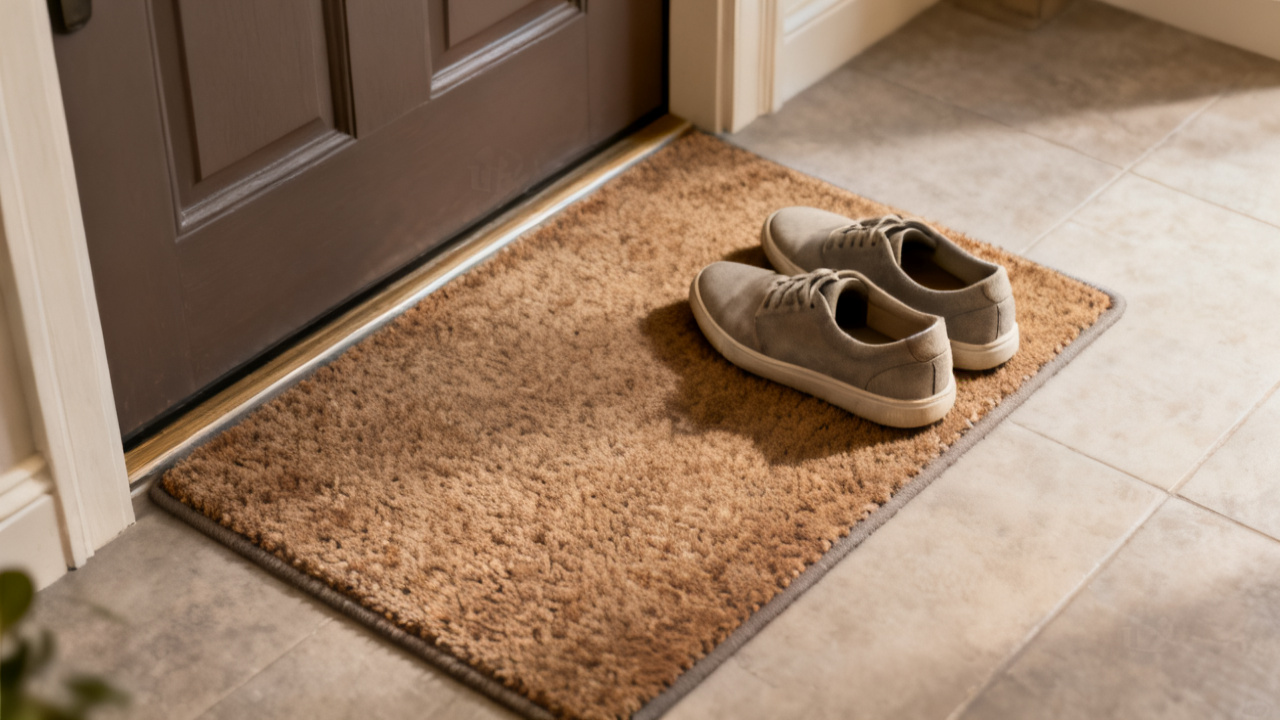
Blot this canvas sneaker with old paper towel to pull out excess moisture
Grab a stack of crumpled paper towel you set aside for cleaning up spills, no need for fancy reusable cloths here, since the shoes are caked with faint street grime. Press the towel firmly against the canvas upper first, dabbing instead of rubbing so you don’t work dirt deeper into the woven fabric. You stuff a few wadded sheets into the toe of each shoe too, pressing them down against the insole to soak up the water pooled at the front. Swap the sheets out for dry ones when they get completely saturated, repeating until the paper towel comes away only faintly damp instead of dripping. Don’t wring out the canvas, that can warp the shape of the toe box and make the shoes fit awkwardly when they dry. You can blot the edge of the rubber sole too if it’s caked with wet dirt, to keep it from leaving streaks on the windowsill later.
Tuck odor-absorbing inserts into each shoe of this pair
You can use store-bought charcoal inserts if you have them, or mix up a quick DIY version if you don’t have any on hand. Making your own takes less than two minutes, and uses supplies you almost certainly already have in your kitchen:
- Scoop 3 tablespoons of baking soda into the center of a clean coffee filter, making sure you don’t overfill it so the powder doesn’t spill out into the shoe.
- Add 2 drops of your favorite essential oil if you want a light, fresh scent; tea tree and eucalyptus work well for cutting through mildew odors, but any scent you like works.
- Twist the top of the coffee filter closed, securing it with a small rubber band so no baking soda escapes while the shoes dry.
- Tuck one filter bundle into the toe of each shoe, pushing it back slightly so it sits against the insole where most of the moisture is trapped.
The baking soda will pull residual moisture out of the canvas and insole while neutralizing the sour, mildew smell that builds up when wet fabric sits closed up for too long. Avoid using scented powder made for carpets, it can leave a sticky residue on the canvas that’s hard to wash off later.
Set this pair on the breezy windowsill above your kitchen sink
The window above your sink is cracked open a few inches, letting in cool, dry evening air that will speed up drying time without exposing the shoes to direct heat. Don’t set them on top of a radiator or near a space heater, high heat can shrink the canvas and cause the rubber sole to separate from the upper over time. Prop each shoe up at an angle, with the toe pointing slightly down, so any remaining moisture can drain out of the eyelets instead of pooling at the bottom of the insole. You leave the laces loose and the tongue pulled forward a little to let as much air circulate inside the shoe as possible. If you don’t have an open windowsill available, you can set them near a running box fan instead, as long as the air flow is directed at the opening of the shoes to pull out damp air.
Leave this canvas sneaker pair alone for the rest of the night
You don’t need to check on them every hour, mess with the inserts, or dab at them again tonight. Any extra handling right now will just slow down the drying process, and you won’t be able to tell if the odor is gone until the fabric is completely dry anyway. You can toss the damp socks you wore on your commute into the laundry hamper while you’re in the kitchen, then head into the living room to unwind for the rest of the evening. The air circulating through the open window will do most of the work for you, and there’s no benefit to hovering over the shoes while they dry. You can grab a pair of fuzzy house slippers to wear while you make dinner, no need to think about the sneakers again until tomorrow.
Test this pair for dryness and lingering scent before your next commute
You’ll check on the shoes first thing tomorrow morning, right before you grab your bag to head out for the day. Start by pressing your finger against the canvas upper and the insole to make sure no damp spots remain, even deep in the toe box where moisture tends to hide. Pull the coffee filter bundles out and give the inside of each shoe a quick sniff to see if the mildew odor is gone. If the shoes are still slightly damp or the smell lingers, you can swap out the baking soda bundles for fresh ones and leave them on the windowsill for another day, opting for your waterproof pair of boots for your commute instead. If they’re fully dry and the smell is gone, you can shake out any stray baking soda powder, re-lace them, and slip them on to head out the door. You don’t need to wash the entire pair unless the odor comes back after a few wears, since over-washing can break down the canvas fabric faster. If you do end up washing them later, you can repeat this same drying process to keep mildew from building up again the next time they get wet.