Stop Drying and Wear the Other Pair
These will not be dry by morning. The other pair is in the closet. You brush a raindrop off the laces of the wet suede chukkas in your hand, setting them briefly on the edge of the Doorstep Bench to brush the mud off the soles before you bring them inside. The damp fabric of your jeans sticks to your calf, and you huff a quiet laugh at the fact you thought you could outrun that random mid-evening thunderstorm.
This soaked pair has a saturated toe box
You press the side of your index finger to the rounded toe of the right shoe, and moisture seeps up immediately through the napped suede, leaving a dark splotch that won’t fade until the material is fully dry. The inner memory foam insole squelches slightly when you squeeze the heel, a sign there’s enough trapped water to leave your socks soaked through if you tried to wear them tomorrow, even if the outside felt dry to the touch. Illustrative example: If you left them sitting in the rain on your porch for 97 minutes before you remembered to bring them in, the inner lining will hold moisture twice as long as a quick 5 minute walk through a downpour. Avoid any rushed drying hacks that could ruin the material, and reference the list of common missteps below to keep the pair in good shape as it dries:
| Drying Mistake | Impact on This Soaked Pair | Quick Fix If You Already Did It |
|---|---|---|
| Setting near a space heater or forced air vent | Suede will crack and shrink, the rubber sole may warp and separate from the upper | Move them to a cool, shaded spot with indirect cross-breeze immediately |
| Leaving laces tied tight while drying | The tongue will stay crumpled and the opening won’t get enough airflow to dry the inner lining | Loosen laces all the way to the bottom eyelet and pull the tongue forward as far as it will go |
| Setting them upside down on the heel to drain | All trapped water will seep into the heel cushion, breaking down the foam padding faster over time | Flip them right side up and tilt the toe slightly downward over a towel for 10 minutes to drain excess water |
| Wiping wet suede with a damp cloth to remove mud spots | The stain will set deeper into the nap, leaving a permanent dark mark | Brush off any loose mud with a dry bristle brush once the suede is fully dry instead |
Stuff each shoe with crumpled printer paper right now
Grab the stack of scrap printer paper you keep by the entry for grocery lists, crumple 3 to 4 sheets per shoe into loose balls, not tight enough that they stretch the shoe opening. Tuck the balls all the way down to the toe box, making sure they fill the space without pushing the sides of the suede out of shape. Replace the paper once every 4 hours if you’re awake to do it, or once first thing tomorrow when you get up, to pull as much excess moisture out of the inner lining as possible. Avoid using newspaper, because the ink will transfer to the light beige inner lining and leave a permanent grey stain.
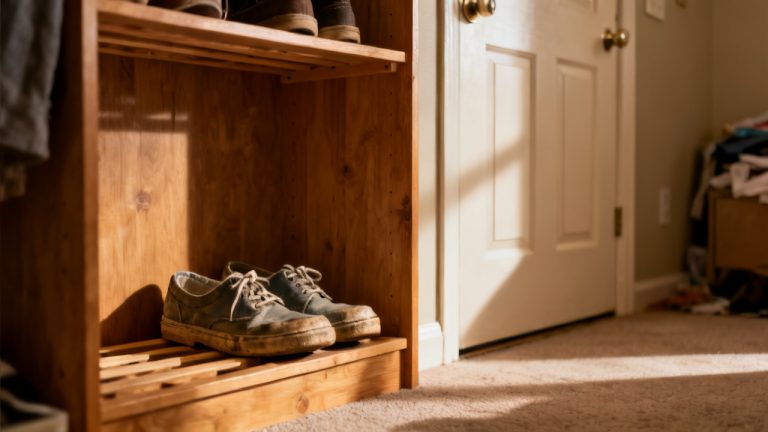
Prop this pair upright on the lowest entry shelf
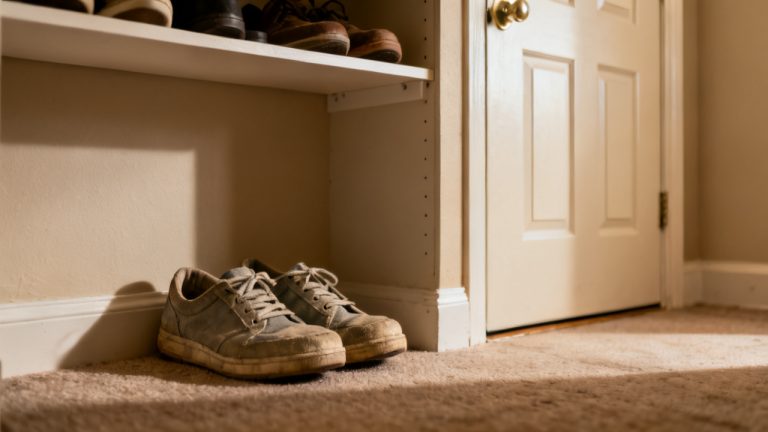
The lowest shelf sits near the crack under the front door, where a soft cross-breeze flows through most days, even when the weather is cold. Line the shelf with an old cotton dish towel first, so the wet soles don’t leave dark water rings on the finished wood. Tilt each shoe slightly so the toe points downward a fraction, letting any remaining trapped water drain out onto the towel instead of sitting in the heel padding. Don’t stack anything on top of the shoes, because the weight will flatten the suede nap and leave permanent dents in the upper.
Leave this shoe to air dry for at least 24 hours
Even if the outside of the suede feels dry to the touch after 12 hours, the inner lining and insole will still hold hidden moisture that will make your socks damp the second you slip your foot inside. Resist the urge to test them by slipping your toe in, because the oil from your skin will leave a mark on the damp suede that’s hard to remove. If the weather is especially humid, you can run a small fan on low across the entryway for a few hours to speed up airflow, but make sure it’s not pointed directly at the shoes to avoid drying the suede too fast.
Set this pair aside for tonight’s wear pause
You are done tending to these shoes for the night. You’re not going to waste time hovering over them, blowing hot air on them or trying to blot them dry with a hair dryer, because none of those tricks will get them ready in time for your early morning meeting. The other pair of chukkas, the dark brown leather ones you bought last month, are waiting in the hall closet, already broken in and ready to wear with the slacks you laid out for tomorrow. Hang your wet jacket on the hook by the door, grab a glass of water from the kitchen, and stop thinking about the wet pair for the rest of the night. You don’t have to fix this right now, and rushing the process will only ruin a pair of shoes you really like.
Check this pair for dryness when you get home tomorrow
When you walk in the door after work tomorrow, set your work bag down by the shelf and first press your finger to the inner toe of each shoe to test for hidden moisture. If they feel fully dry, take out the crumpled paper, brush the suede nap with a soft bristle brush to lift any flattened spots, and wipe the soles off with a damp cloth to remove any remaining mud. If they still feel slightly damp, replace the paper with fresh crumpled sheets and leave them on the shelf for another 12 hours before you test them again. Once they’re fully dry, you can treat any remaining mud spots with a suede cleaning bar, and tuck them back in your closet next to the leather pair for your next walk on a clear day. You can also slide a small cedar shoe tree into each one to help the upper hold its shape and absorb any last bits of lingering moisture the paper missed, if you have a set stored on the top shelf of your closet.