The Puddle That Filled the Toe Box
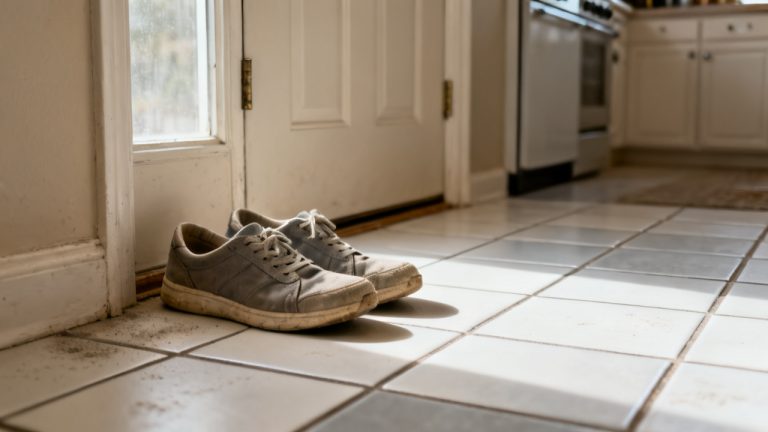
Water sits in the toe when you look in. You have not stuffed anything in yet. Your sock squelches when you peel it off, leaving a wet ring on the doormat that bleeds into the frayed edge. The rest of this canvas pair is spotted but only damp, not soaked through, save for the left shoe’s toe box that took the full plunge into that unmarked pothole three blocks back. You balance the shoe in one hand, the other brushing off the small gravel bits stuck to the rubber sole, before you start working through the drying steps.
Drain excess water from this canvas pair first
You hold the shoe by its heel, toe pointing down toward the doormat, to let gravity pull the pooled water out without stretching the stitched canvas seams. You don’t squeeze or wring the toe box, since that can warp the shape of the reinforced rubber bumper and loosen the glue that holds it to the canvas upper. Illustrative example: Hold it at a 45-degree angle for 90 seconds to let every last trapped drop slip out without dislodging the glued toe cap reinforcement. You tap the heel lightly against the mat once the steady drip slows to a stop, dislodging any tiny water droplets stuck in the stitching along the toe seam. You set the drained shoe next to its matching right pair, which only got a light splatter on the side, no pooled water inside its toe box. You double-check that no water remains pooled under the insole rim, tilting the shoe side to side to listen for any sloshing you might have missed.
Pull the liner out of this shoe to air separately
The thick foam liner inside this pair has a worn suede heel patch you glued on last month to reduce friction, so you pull it out gently by the back edge to avoid peeling that patch loose. You shake the liner over the mat once, and a small stream of water drips out, proof that it absorbed more moisture than the inner canvas lining did. You set the liner on the dry edge of the mat, next to the barely damp liner from the right shoe, so both can get air flow on all sides. You run a finger along the inner edge of the left shoe to make sure no small bits of debris got washed in with the puddle water, flicking out a tiny piece of mulch that stuck to the seam near the toe. You brush off any loose dirt on the liner’s surface before you set it down, so you don’t have to scrub it off once it dries and cements to the foam.
Absorbency test materials for this pair
You keep a bin of quick-drying supplies under your kitchen sink for moments like this, and all of the following materials work well for pulling residual moisture out of the toe box without damaging the canvas or rubber.
| Material | Time to soak up 1 tsp of shoe moisture | Notes |
|---|---|---|
| Crumpled plain paper towel | 2 minutes | Leaves faint lint on canvas weave, best for first quick pass to blot visible surface moisture |
| Clean old cotton crew sock | 3.5 minutes | Leaves no lint, can be left inside overnight without risking residue on the shoe’s inner lining |
| Unscented clay cat litter | 7 minutes | Draws out deep, trapped moisture from foam and seam layers, requires a thin mesh pouch to avoid leaving grit inside the shoe |
| Recycled black and white newspaper | 2.5 minutes | Low cost and widely available, avoid for light-colored canvas to prevent faint ink transfer to the upper |
You grab the clean old cotton sock first, since you don’t have any mesh pouches for cat litter handy and you want to avoid lint or ink transfer on this pair’s off-white canvas. You crumple it loosely, so it still has space to expand as it absorbs moisture, instead of packing it tight into the toe box. You don’t add more than one sock to the toe area, since overstuffing can stretch the canvas and warp the shape of the shoe so it fits differently once it dries.
Set this shoe on a raised rack to avoid trapped moisture
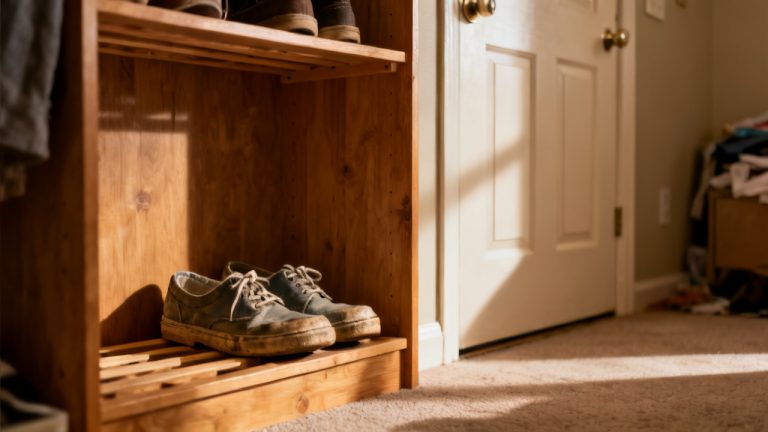
If you set the shoe flat directly on the tile floor, the rubber sole will trap any remaining moisture against the hard surface, slowing evaporation and leaving the edge of the sole damp for longer than necessary. The slatted top of the Doorstep Bench outside your unit is ideal if the forecast stays dry for the next four hours, letting air circulate under the sole and around the toe box from all angles. You tuck the crumpled cotton sock into the left shoe’s toe box first, then add a second loosely crumpled sock into the heel area, before setting both shoes on the slats, toes pointing slightly down to let any leftover moisture drip out if it loosens. You leave the liners on the inner doormat, since they don’t need as much air flow and you don’t want them to blow away if the wind picks up. You don’t set them in direct sunlight, since prolonged UV exposure can fade the off-white canvas to a yellowish tint that’s hard to reverse. You also avoid setting them near the space heater by your couch, since extreme heat can soften the glue holding the sole to the upper and cause it to separate earlier than it otherwise would.
Check this pair for residual dampness before your next errand run
Your next scheduled errand is 18 hours from now, when you plan to walk to the corner coffee shop and drop off a padded envelope at the neighborhood post office, so that’s when you’ll do your first full check of this pair. You’ll start by pressing the pad of your index finger firmly into the inner toe box, holding it there for three seconds to feel for any cool, damp spots that signal residual moisture. Next, you’ll run your finger along the seam where the canvas upper meets the rubber toe bumper, since that crevice often holds trapped moisture that takes longer to evaporate than the flat canvas surface. Finally, you’ll pick up the liner and squeeze it lightly along its full length to make sure no dampness remains in the foam core. If any spot feels even slightly cool to the touch, you’ll swap out the cotton sock stuffing for a fresh dry one, and leave the pair on the slatted rack for another three hours before checking again. If they’re still not fully dry by the time you’re ready to leave, you can grab your backup pair of white leather sneakers for the errand instead, no rush to get this pair ready before it’s time. If they are fully dry, you’ll slip the liners back in, lace them up, and head out, no leftover puddle sloshing to slow you down.